Monday, 21 November 2011

Ian and Nathan's NZ, Part 2!!!!1!

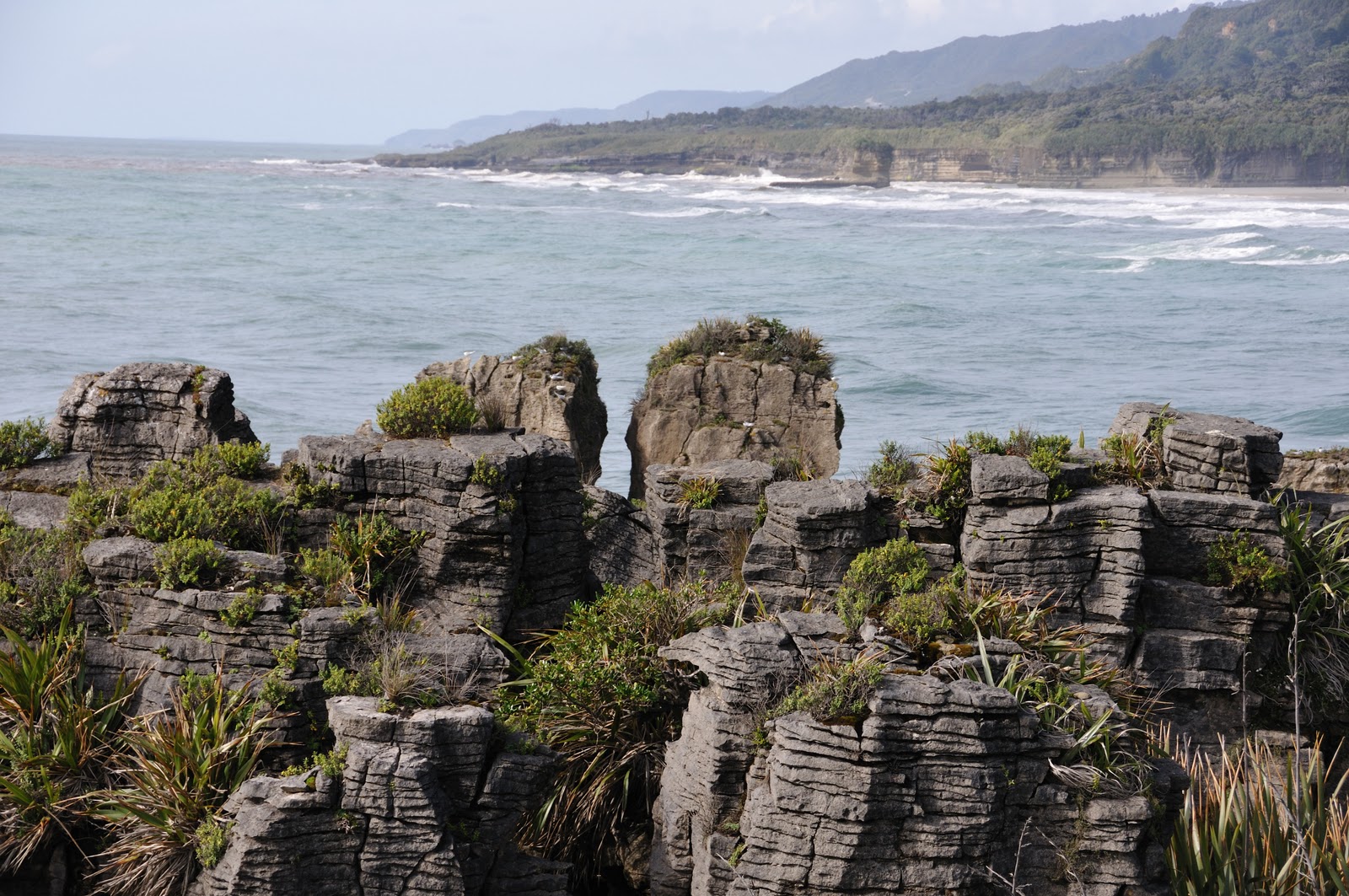
Picking up where we left off (in the rain), we headed north towards Abel Tasman National Park. We stopped to check out the famous pancake rocks in Paparoa N.P. before heading all the way to Marahau, the southern gateway to Abel Tasman.

IHOP?
We also passed Moteuka on the way, famous for its hop crop. We later found some beer brewed with hops from the same fields we passed:
hop crop hop crop hop crop hop crop hop crop hop crop hop crop
 We stayed at a small beach camp, relishing the opportunity to use a real-ish kitchen to consume a bit of NZ lamb and some NZ wine. The next morning we left everything we didn't need in the car and headed out on the Abel Tasman Coast Track:

 For the next four days, we wandered around beaches, dense jungles, coastal highlands, and tidal crossings . Pictures below:
Jungle.

Sweet NZ ferns

A typical vista on the hike
One of our campsites

We're better than Oregon Trail oxen at fording rivers!

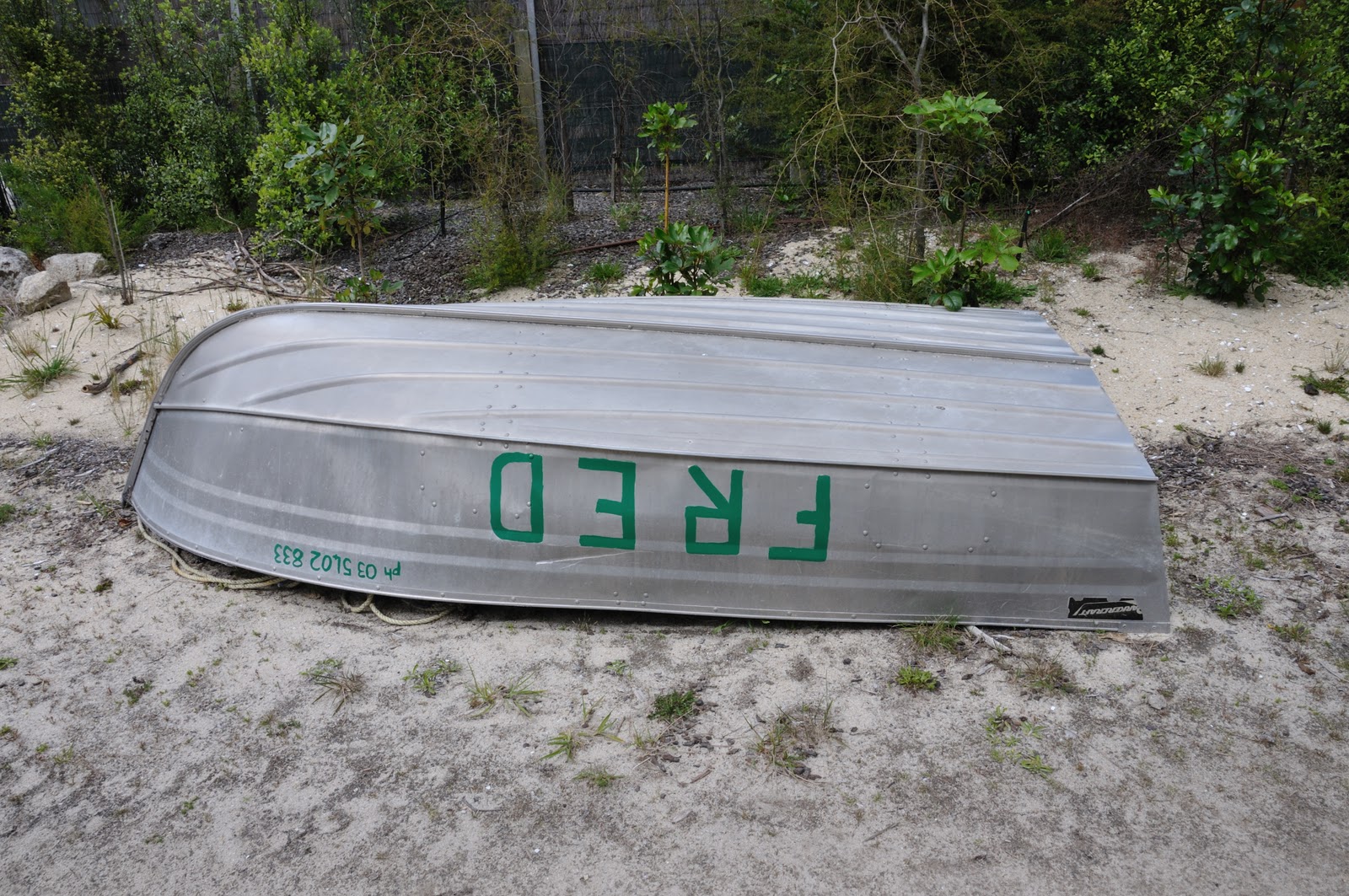
Hi, Fred.
We're not sure why they used steel cables when there were so many good vines around...
One of Ian's sweet photos from an evening on the beach.
Ian working on his tan during a tidal crossing.
Second breakfast.
Cool lookin' tree with cool lookin' backdrop.


Creative Commons License


Friday, 18 November 2011

Ian and Nathan's Travels, Part 1!!!!1!

Day 1: Christchurch

In case you're wondering what happened to the other two people writing the blog, here we are (Nathan (Hall-Snyder) and Ian)!
This is Ian

This is Nathan (HS, not Golshan)
We've been traveling separately from the others and have our own set of adventures to report and our own pictures of rain. Since we've had limited internet access thus far, we'll be putting up pictures of our trip in 3-4 installments - this is the first.

This is a prison cell at the Jailhouse Hostel. You're screwed if there's a fire.
Though we all arrived on the same day, Ian and I stayed at a different hostel the first night. Because of the recent earthquake, accomodation in Christchurch is insanely difficult to find. The majority of the Central Business District (read: most of the city) is closed off for seismic inspection, demolition, and reconstruction. As the others mentioned, the city still has a post-apocalyptic feel to it - even the roads have asphalt scars where the earth moved during the quake.

Day 2 - Rain
The next morning, we picked up our rental car (a manual toaster-on-wheels), bought some tea, and tent, and some Steinlager Pure, and headed into the mountains and rain for some camping!

Our trusty Diahatsu, stuck in mud not six hours after we rented it. Fortunately Ian managed to push the car out while I turned the  clutch into a consistency not unlike the mud in which we were stuck.
The first night we camped by a lake near Arthur Pass - there had been so much rain that there wasn't much of a boundary between the lake and the grass - we set up camp right on the edge of the newly formed swamp, amid continuous wind and rain. We were about to cook our dinner (linguine with clams mussels) inside the car, but Ian disappeared into a thicket and returned with a flat section of...tree, which worked wonderfully as a table.

Ian, in his own words: "Lifting heavy things makes me happy, ok?"

Look mom, it's a shelter!

Day 3 - Rain

The second day we spent encouraging flooring our little rental car over Arthur Pass. Since even the local Keas seemed cold and unhappy, we decided against trying to hike any of the local peaks in the driving rain/snow, and continued West to Greymouth.

Wet and cold Kea is very wet and cold.
Don't look up. So much for the New Zealand Beach Vacation...
Ian looks forward to hiking in snow and rain in Arthur's Pass!
At this point, we were pretty sick of rain - aside from being cold and wet, it was a cruel reminder of the rain that stopped the solar car race weeks earlier. So we hunted around for a bit of internet, found a cafe, bought some drinks, and checked out the weather. At this point, Ian started musing about a "New Zealand beach vacation," and suggested that we do the Abel Tasman track, a 50 km hiking trek through the (sunny!) Abel Tasman National Park. Since that area looked the dryest of all our options, we booked several campsites and headed North for the track.

That night, we stopped at the trip's strangest camping spot - a pizzeria/campsite/hotel/bar/swamp in the middle of nowwhere, owned by a German woman. We paid her a small amount to camp on the lawn, and cooked backpacker's boulliabaise (sp?). In the morning, we were woken up by thunder, so we finished our soggy bread, threw everything into the car and got moving just as the heavy rain hit.

Thursday, 17 November 2011

Vietnam o.O

We're Vietnam! Forest, Nathan Golshan and I said goodbye to Wesley in Christchurch and made it to Ho Chi Minh City after an epic and somewhat tiring series of flights-we went from Christchurch to Sydney, hung out at the airport for an hour, then flew to Bangkok and spent our 12-hour layover making good use of their free internet and comfortable chairs. Unfortunately for us, our layover wasat a bad time for going out to the city, so we tried to catch up on sleep and emails instead. Then it was a short hop to Ho Chi Minh City and we were standing outside the airport, looking for our ride to the hostel!

Getting to the hostel involved driving through swarms of people on honda scooters who seem to have a grand disregard for both traffic laws and their own lives- like Stanford cyclists, but motorized. Being picked up by the hostel turned out to be a good call, because it's located down an alley and could easily be missed. Nevertheless, it looks like a good place to stay-and its location in the heart of the backpacker district makes it easy for us to just walk out and find food.

Today we're pretty wiped, so we has an early dinner and wen back inside to hide from the rain. Tomorrow we'll set out to explore the city with the rest of the tramping team-NHS and Ian Darr will arrive here shortly.

Saturday, 12 November 2011

"I think it's raining more inside the tent than it is outside"

At the end of my post about Kepler, I mentioned that it was raining a little bit when we ended the track. Usually a spot of rain doesn't bother me, and sometimes it's even quite fun.

Unfortunately for three out of the four of us, "light drizzle" turns out to be a problem when your tent isn't quite waterproof. Wesley, Forest and I basically didn't sleep for half the night after we got off the track.

At the beginning of the night it looked like the tent would hold up and stay waterproof. Water was beading up and rolling off, just as it should. But as the night continued it became clear that this was not the case. All three of us kept rolling over trying to avoid the drips, but every time we touched the tent we got wetter. Then Forest decided to sit up so that we could have a powwow, and his shirt got instantly soaked when he touched the wall.

Wesley escaped to the car, and I followed shortly thereafter. Forest toughed it out in the tent all night--"the captain goes down with the ship!"--and in the morning we woke up late, dried out, and reassessed the situation.

Conclusion: we needed another tarp.

We then optimistically set out to buy another tarp, but of course the hardware store was already closed. The plan for tonight is to have one or two people sleep in the car and one person curl up in the tarp and be sad.

Nathan Golshan would like to note that he has been perfectly dry in his own handmade tent.

We're now heading up the West Coast to check out some glaciers and Arthur's Pass. We'll try to add photos to the posts so you can see where we were.

Hoping for dry weather,
Rachel

New Zealand - Part II

We made it back to Queenstown! In the last few days since the last post we drove down to Te Anau, in the Fiordlands, and hiked the Kepler Loop. This is one of the “Great Walks” for which New Zealand is famous, and one of the few that can be completed as a loop, without taking a shuttle from end to end.

The Kepler Track starts at Lake Te Anau, which is the largest lake on the South Island--the longer arm of the lake is 65 km long! After about an hour’s easy tramping through rainforest with five- and ten-foot tall ferns, we reached the first campsite on the track. When we checked with the local DOC (Department of Conservation) office we had been told that the loop was closed at the top due to avalanche danger, so we planned an out-and-back along a portion of the track, with our first night at the hut at the top of the mountain and our second night at the campsite in the rain forest. We checked out the campsite, agreed that it would be a nice place to stay with a lazy hour’s walk out on the last day, and carried on up the mountain.

The second part of the day’s hike was a posted four-hour climb to the Luxmore Hut, which sits above the tree line—and sometimes above the clouds. We climbed steadily out of the rainforest and through drier, hardier trees, with drifts of lichen instead of the moss that was so ubiquitous at lower elavations. After about an hour and a half we suddenly stepped out of the trees and onto the tussock above the brush line. From there it was an easy walk through light drizzle to the “hut,” which turned out to be much closer to a ski lodge than to the six-bunk hut we enjoyed above Lake Ohau. Luxmore Hut has about sixty bunks, solar-powered lights, propane stoves, and flush toilets—luxurious indeed for a hut at 1085 meters, where everything is flown in by helicopter.


We checked our clocks and found that the planned strenuous day had taken us a grand total of four hours. The clouds were so thick both above and below us that we couldn’t see the fjords below us or the mountains avove us, so we decided to go underground and check out the nearby Luxmore Caves. This turned out to be a brilliant idea: the caves were occupied by other trampers at the very entrance, but once we descended into the tighter parts of the caves there were no other people to be seen. Wesley and Forest set off ahead at a brisk pace, and Nathan Golshan and I hung back to take pictures and look around at the limestone formations around us. When we had gazed our fill we followed the others down through the caves, which quickly narrowed to a single, steeply descending passage with gaps so small we wondered how the long-legged Forest and Wesley had fit through them.


After a while we began to wonder how far ahead of us the others had gone. Nathan and I agreed the Forest would continue until he could go no further—and might have to be hauled out by his soaked sneakers—so when we saw his jacket on a rock by a side passage we knew we had probably reached the bottom of the caves. We continued down to find the end, and found a delicate passage so narrow that even I almost got stuck. We were so deep that we had long since ceased to see limestone formations or signs of other people’s presence. Then we turned around and scrambled out of the cave and returned to the warm, dry hut to dry out and talk to other trampers.


The next day we saw blue skies and fjords far below us when we rolled out of our bunks, and the ranger informed us that the pass would be open and we could go through to the next hut instead of returning the way we came. We gladly set out for a day above the treeline, with views out over the lake and down the fjords. We also discovered the the DOC's definition of "avalanche" is somewhat misleading: the patch of snow they were worried about was just a very short segment that could slip late on a sunny day. It was an easy trot across, and we continued on our merry way. At the end of the day we dropped all of our elevation again, coming to rest at the Iris Burn Hut and campsite. As campers we were not allowed in the hut, so we had a quiet dinner and retired early, pursued by our new enemies: sandflies.

At this point I'd like to comment on New Zealand wildlife. There is actually nothing poisonous in this country. The spiders don't bite and the most annoying insect (the sandfly again) goes to bed at about 9:00 pm and stops bothering trampers. This is completely different from Australia, where most things that could bite you would be painful at the last, and life-threatening at the worst.

Not only do the animals here not know how to be poisonous, they also don't know how to defend themselves. There are multiple species of flightless birds, and the only native mammals are two species of bats. Imported mammals are unfortunately decimating the local birds, which tend to lay eggs in exposed places and cannot even fly away when cornered. Kiwi look adorable, but also rather silly.

Back to the track: after our night at Iris Burn we woke up and commenced the 30 km tramp out. We hiked nonstop for most of the day, because every time we stopped the sandflies started biting. We passed through more variations on forest, and stopped for a snack on the Rainbow Reach Swingbridge. We were very happy to reach our car and set up camp at the end of the day, even though the clouds had rolled back in and it was drizzling lightly when we set up camp.
Tuesday, 8 November 2011

New Zealand - Part I

Hello everyone. Sorry there hasn't been a post in a while. I'll update you on what we've been up to.

Since the great ocean road, we've moved on to a new country. After our few days in Melbourne, the last part of the team said their farewells and headed off to different parts of the south pacific. Our group, Wesley, Rachel, Forest, and I, are tramping around the south island of New Zealand, soaking up the amazing views and being buffeted by the unpredictable spring weather.

We flew into Christchurch, which was still in ruins from the February earthquake, which gave the place an empty, post-apocalyptic feel. It was strange and sad to see a city like that.

From there, we drove out of the city and camped at the base of Mount Somers, a small peak in the foothills of the the southern alps. We spent the night there through the rain and wind, and woke up to beautifully sunny skies. We hiked up the mountain, bushwhacking a fair bit off the marked trail through open grassy slopes to a false peak, and admired the long views of the area, including the rocky peaks of the alps in the distance. We then hiked down to the trail and followed it to our first view of a Department of Conservation backcountry hut, which range from the hotel-like to simple metal boxes with bunks. This one happened to be pretty nice, with bunks for 16 people, bathrooms, and facilities for cooking and eating (although no stoves). That night we made int back to the same place as before to camp, and after sleeping like logs, we headed off to our next hike.

That day we found Lake Tekapo, a brilliant blue snow-fed lake also in the foothills of the alps. We hiked up to the observatory on the top of Mt. John, adjacent to the lake. The staff at the top informed us that the wind was gusting at 140kph, and on the exposed ridge, it certainly felt that way. We threw rocks in the air and watched them blow right off the side of the mountain. After having a little snowball fight with the last vestiges of spring snow that were left on the peak, and soaking up the panoramic views of the surrounding lakes and grasslands, rimmed by huge peaks, we climbed down and found a place along the highway in a grove of pines to camp for the night.

The next day we stopped in a DOC visitor center and decided to go to Lake Ohau and hike up one of the steep-sided river valleys that fed into the lake. This was our first multi-day trip, and our first night in a hut. After the cold, viciously windy hike into the hut, the warmth of the hut's wood stove was very welcome indeed. The next morning we had beautiful weather, and we hiked over a small knob and across a long swingbridge into a secluded side valley, surrounded on all sides by 1500 to 2000 meter high peaks. We spend a few lunchtime hours without our packs, walking along the valley floor, eating sandwiches, going barefoot into the cold water, and visiting all the waterfalls cascading down the sides of the valley. Unfortunately our food supply dictated that we leave, so we hiked all the way back out to the car and drove to a designated free camping site for the night.

That brings us to yesterday, when we woke up late and drove into Queenstown. We spent the night in a hostel, getting clean and doing laundry. As I write i'm standing in a DOC visitor center, deciding with the group where we're headed next.